

November 21, 2026 · Fleet
Private Label Fleet and Truck Wash Chemicals for Commercial Operators
Fleets of delivery vans, trucks, buses and service vehicles carry a company's brand down every street. Clean vehicles signal a well-run business, and dirty ones do the opposite. Fleet operators, truck washes and mobile fleet washing services buy cleaning chemistry in volume, and they care about speed, cost per vehicle and results.
Key takeaways
- Fleet washing prioritizes speed, cost per vehicle and road-film removal.
- Touchless and brush washing need different chemistry.
- Aluminum brighteners, degreasers and presoaks are core products.
- Bulk packaging and dependable supply win contracts.
What fleet operators need
- Road film removal: traffic film builds up fast on large vehicles.
- Speed: products that work quickly with minimal scrubbing.
- Cost per vehicle: high-dilution concentrates.
- Surface safety: paint, decals, wraps, glass and aluminum.
- Consistency: the same results across many vehicles and locations.
Core fleet product categories
- Presoaks / traffic film removers: for touchless and high-pressure washing.
- Truck and fleet wash soaps: for brush and hand washing.
- Aluminum brighteners: for trailers, tanks and wheels (these require careful handling and labeling).
- Degreasers: for engines, chassis and undercarriages.
- Wheel and tire cleaners
- Protectants and drying aids
Mobile fleet washing
Mobile fleet washing businesses clean vehicles on site, often with limited water and strict runoff rules. They value concentrated, efficient products and support with environmental compliance.
Packaging and supply
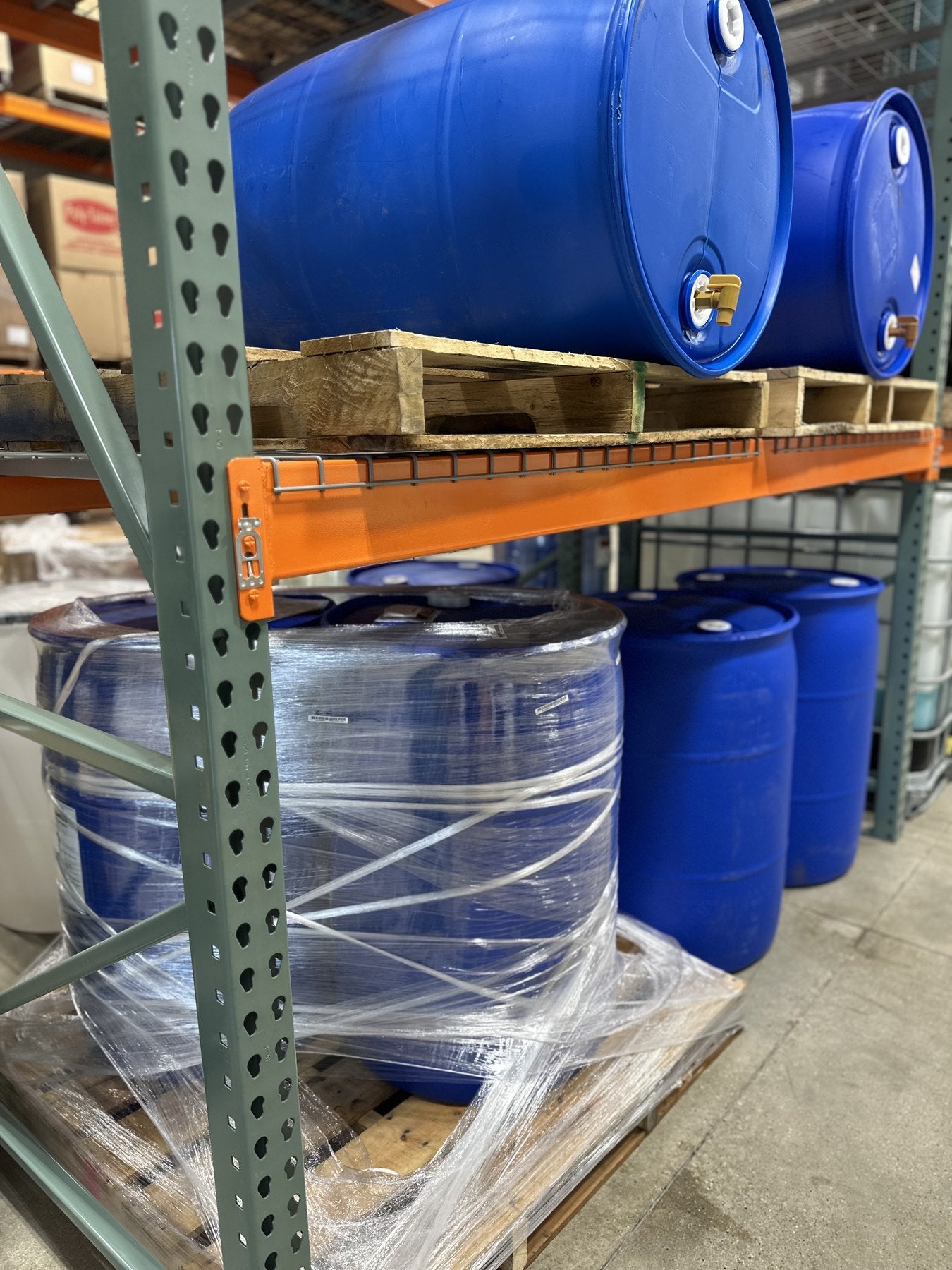
Fleet chemistry is sold in pails, drums and totes. Dependable supply, clear dilution guidance and accurate safety documentation help win and keep contracts.
How private label works for your fleet chemistry program
- Brief: tell us who the product is for, how it will be used, and what it must do better than what's on the market now.
- Samples: we prepare bench samples based on proven chemistry, or develop a custom formula.
- Real-world testing: you test samples in the conditions your customers face, and we refine until you approve.
- Packaging: choose bottles, closures and sizes; we fill, cap and label your product.
- Production: your approved formula is blended, batch-checked and filled under one roof.
- Reorders: consistent batches and predictable lead times as your fleet chemistry program grows.
Questions to ask before you launch your fleet chemistry program
- Who is the customer, and what problem does this product solve better than competitors?
- What claims will you make, and how will you prove them?
- Which sizes and formats do your channels need, retail, professional or bulk?
- What labeling and compliance requirements apply where you'll sell?
- Which companion products complete the system and raise order value?
Frequently asked questions
What's the difference between touchless and brush wash chemistry?
Touchless washing relies more on chemistry to remove road film, while brush washing uses friction and gentler soaps.
Are aluminum brighteners safe?
They're effective but require careful handling, labeling and dilution guidance.
Can fleet products be branded?
Yes. Fleet service providers often want private-label chemistry under their own name.